
Affiliate disclosure: This article includes affiliate links. We may earn a commission from qualifying purchases, at no extra cost to you. As an Amazon Associate I earn from qualifying purchases.
You bought a puzzle toy, placed it on the floor, and waited for your dog to investigate. Perhaps they sniffed it once and walked away. Perhaps they wanted to chew the whole thing instead of moving the pieces.
That first attempt is useful information. It is not a test your dog has failed.
At Found & Fearless, we believe second chances deserve room to unfold. That includes play. Introducing rescue dog puzzle toys can be a small, shared activity rather than another task to master.
Begin with the dog in front of you
Before choosing a toy, watch how your dog already likes to interact with things. Do they enjoy sniffing for food, carrying toys, or working at a stuffed rubber toy? Are unfamiliar objects interesting to them, or something they prefer to observe from a distance?
Start with those preferences. A popular puzzle is only useful if its size, materials, and challenge suit your dog. Read the manufacturer’s age, sizing, chewing, and supervision guidance before buying.
You also do not need to buy several toys at once. One suitable activity gives you something to try and something to learn from.
Make the first reward easy to find
Choose a quiet moment and a stable surface. Stay nearby, and let your dog approach the toy rather than placing it against their face or repeatedly pushing it toward them.
For a food puzzle, begin with an easy setup permitted by its instructions. Leave a few rewards visible or demonstrate one moving part. Use food that already suits your dog’s diet, and include those portions in their daily food allowance.
Keep the first attempt brief. You are looking for comfortable interest, not a particular number of minutes. If your dog walks away, let them. If they repeatedly bite the tray, struggle with it, or appear uncomfortable, pause and try an easier setup another time.
Two different enrichment options to explore
KONG Classic: a stuffable rubber option
The KONG Classic in our pet picks is a different kind of activity from a sliding puzzle. It is a rubber toy that can be filled with appropriate food. KONG describes its red Classic rubber as intended for average chewers; it also offers other rubber choices for different chewing needs.
Our linked pick is the Large, two-pack listing. That size is not a universal choice for rescue dogs. Check KONG’s sizing guidance and your dog’s chewing style before selecting a variant. KONG specifies supervised use and discontinuing use when the toy is damaged.
Nina Ottosson Hide N’ Slide: an intermediate puzzle
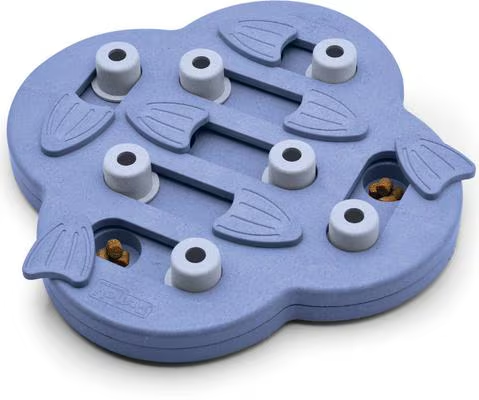
The Nina Ottosson Hide N’ Slide in our pet picks uses moving pieces to cover treat compartments. Outward Hound classifies it as Level 2, intermediate.
That matters when choosing a first puzzle. A dog new to food puzzles may prefer a simpler activity before trying combined movements. If you choose this model, follow its instructions for an easier introduction and stay with your dog during the session. Treat it as an interactive puzzle, rather than leaving it available as a chew toy.
These are product options, not claims that we have personally tested them or that either one will suit every dog.
Let the next session follow what you noticed
Did your dog enjoy finding exposed treats but lose interest when they were hidden? Keep the next setup easy. Did they approach more readily when you sat farther away? Give them that space again.
Change one thing at a time. You do not need a shelf of new toys to create a thoughtful routine. An activity your dog willingly returns to can be more useful than a harder puzzle they avoid.
Check the toy before and after use, clean it according to its instructions, and put it away when the shared activity is finished.
A little discovery, at their pace
The goal is a comfortable opportunity to explore together. There is no prize for reaching the hardest level, and no deadline for enjoying something new.
Explore our Rescue Pet Essentials storefront to compare the options for your dog. For the wider settling-in journey, visit our First 30 Days With Your Rescue guide.
Found is just the beginning.
Pingback: Slow Feeder vs Puzzle Toy: A Rescue Dog Guide