

Prepare a calm, secure welcome before bringing home a rescue dog or cat. Use this checklist with the shelter’s instructions and your veterinarian’s advice; adjust the setup for your pet’s age, health, and preferences.
Before pickup day
- Food: ask the shelter or foster what your pet has been eating. Keep it familiar initially when practical and discuss any transition with your veterinarian.
- Bowls: choose suitable food and water bowls, wash them regularly, and keep fresh water available.
- Identification: prepare a current ID tag and a secure collar or walking setup. Confirm the microchip number, registry, and transfer process with the shelter. Add your current details promptly; existing shelter contacts can still help reunite a lost pet.
- Veterinary plan: arrange an early checkup, collect medical records, and confirm any medication instructions and follow-up dates. Symptoms or urgent concerns need attention sooner.
- Cleanup: keep a suitable enzymatic cleaner available. Follow the surface and product instructions. Cleanup can reduce lingering odors; repeated accidents may also need training or veterinary support.
For a rescue dog
- A well-fitting harness or collar and a sturdy fixed-length leash suited to your dog. Check fit and secure fastenings before the journey home.
- A comfortable bed and quiet resting area.
- A crate or pen only if appropriate for your dog. Allow enough space to stand, turn, and lie comfortably; introduce it gradually with positive experiences. Do not force confinement if your dog panics.
- Poop bags and a few size-appropriate toys. Supervise new toys and chews and remove damaged items.
For a rescue cat
- A secure carrier, with the door and fastenings checked before travel.
- Accessible litter boxes in quiet locations. Ask about the cat’s existing litter preferences and provide enough separate resources for a multi-cat household.
- A stable scratching surface and a comfortable resting place.
- A safe hiding spot, such as a covered bed or suitable box. Block hazardous gaps behind appliances and let the cat choose when to emerge.
Set up a safe home base
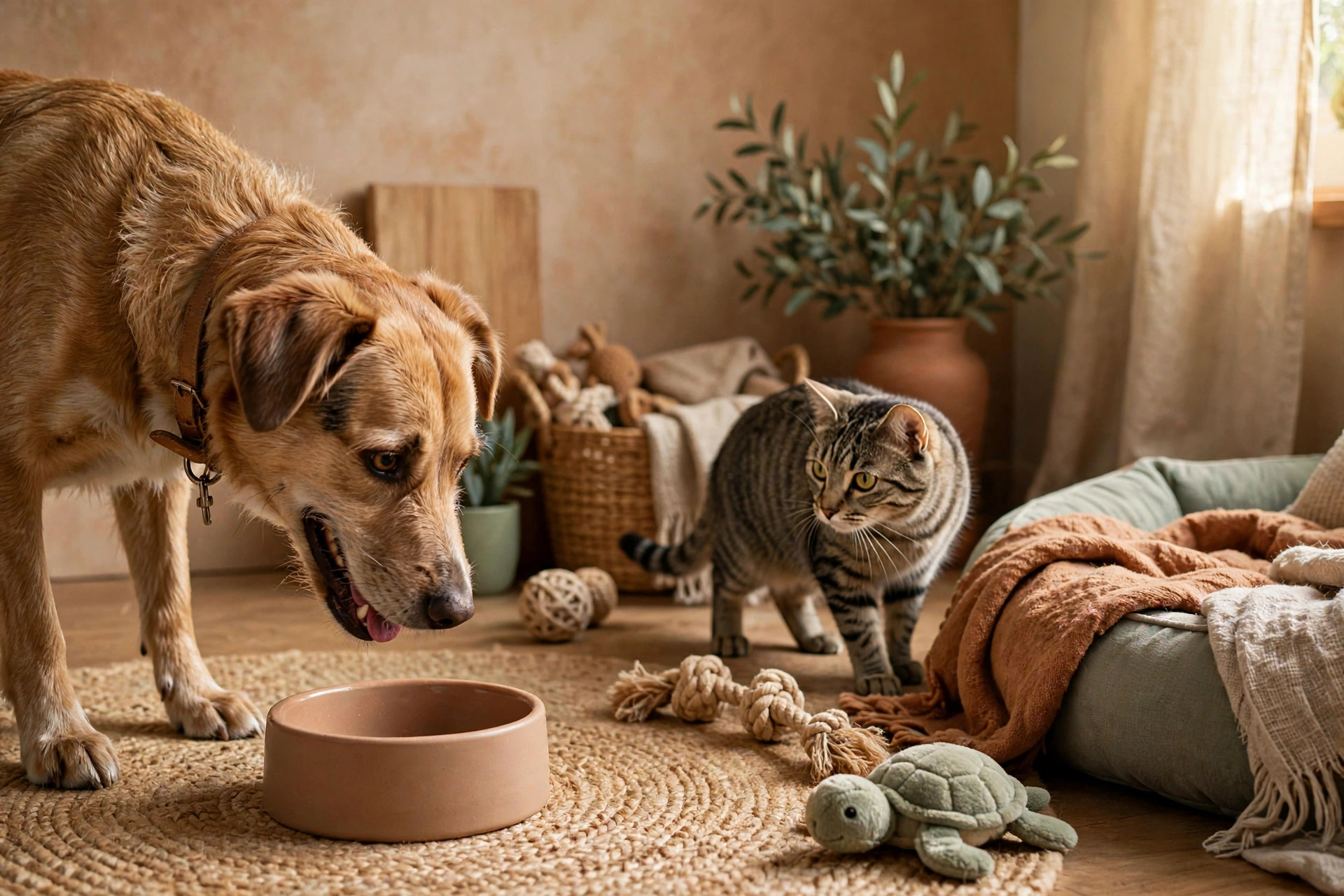
- Choose a quiet room or resting area away from busy entrances.
- Secure doors, windows, fences, gates, and escape routes.
- Put medicines, chemicals, unsafe foods, toxic plants, cords, and small swallowable objects out of reach.
- Give existing pets separate spaces and plan gradual introductions with shelter or professional guidance.
- Agree on household routines and who handles feeding, walks, and veterinary appointments.
The first 48 hours
- Keep visitors and outings limited while your pet learns the new space.
- Offer familiar food and predictable opportunities to rest and toilet.
- Let your pet approach rather than forcing cuddles or introductions.
- Monitor eating, drinking, toileting, and comfort. Contact your veterinarian promptly about appetite changes, illness, pain, or distress.
- Keep notes and ask the shelter for support when you need it.
The 3-3-3 adjustment framework can help set expectations, but it is not a medical waiting period or a deadline for progress.
Your first month, with a little more confidence
Get adoption checklists, settling-in tips, and a week-by-week plan for dogs and cats.
Free with newsletter signup. Unsubscribe anytime.
Pingback: 9 Rescue Kit Essentials, Compared (2026) | Found & Fearless
Pingback: Illustrative Rescue Journeys | Found & Fearless
Pingback: Create a Cozy Corner for Your Rescue Cat